

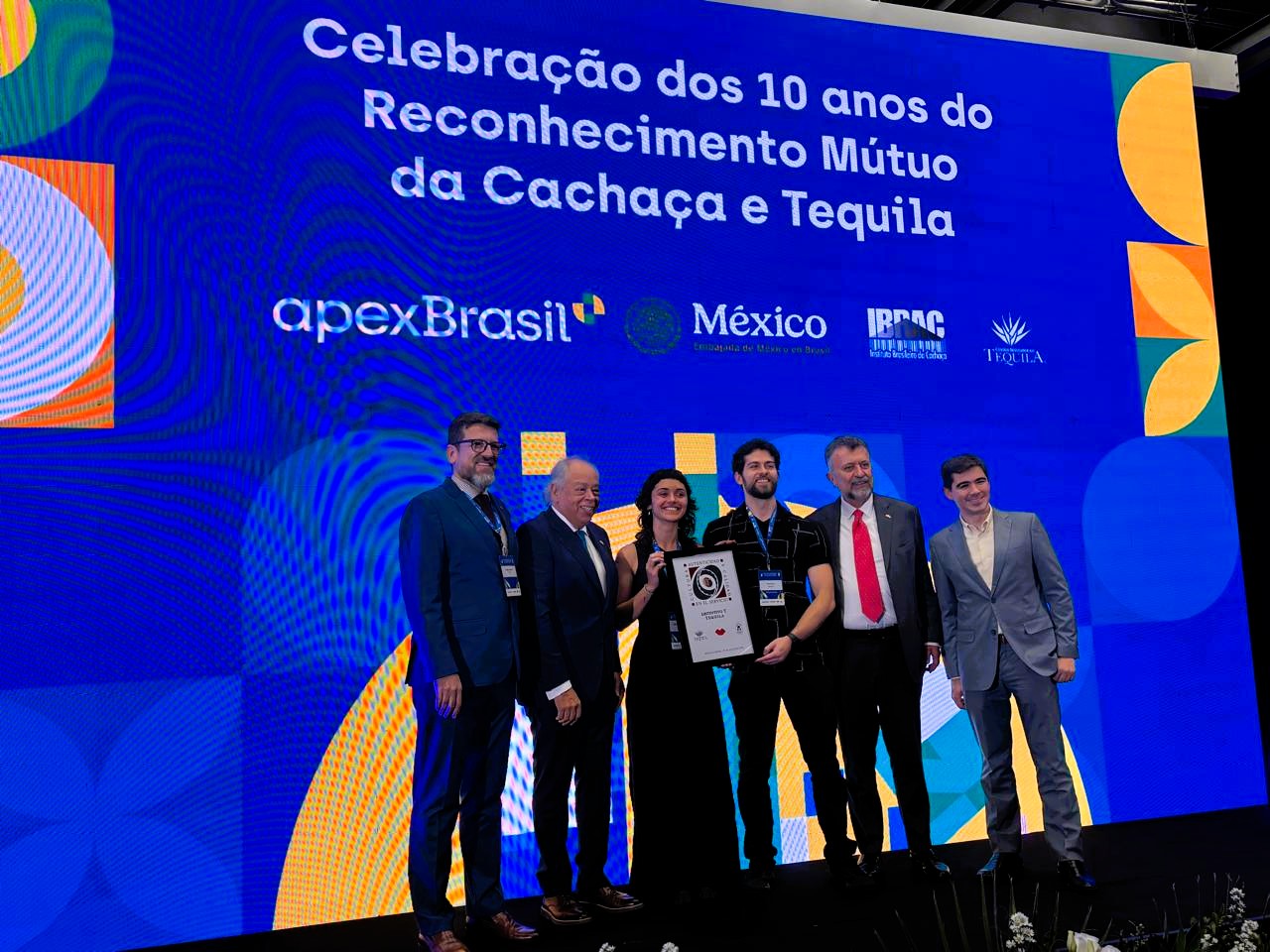
Brasília, Brazil .— Mexico and Brazil have reaffirmed their commitment to protecting two of Latin America’s most emblematic spirits by renewing their cooperation agreement marking the tenth anniversary of the mutual recognition of Tequila and Cachaça as Geographical Indications and distinctive national products.
The renewed agreement was signed by the Tequila Regulatory Council (CRT), the Brazilian Cachaça Institute (IBRAC) and the National Association of Alambique Cachaça Producers (ANPAQ) during a ceremony attended by government officials, regulatory authorities and industry representatives from both countries.
The organizations said the renewed partnership aims to strengthen joint efforts to safeguard the authenticity of both products, prevent the misuse of their names, improve traceability and promote responsible international commercialization.
CRT President Aurelio López Rocha described the agreement as a new step in the long-standing collaboration between Mexico and Brazil to protect their iconic spirits.
“This instrument represents unity, cooperation through diversity, and the decision to combine our capabilities to strengthen protection, authenticity, traceability, responsible promotion and the international projection of our beverages,” López Rocha said.
The original agreement was signed on July 25, 2016, establishing a framework for the mutual recognition of Tequila and Cachaça as products linked to their geographical origins. It also created mechanisms to prevent improper use of both names while promoting cooperation on quality standards, authenticity and legal compliance.
The anniversary event also recognized the contributions of several institutions that have supported this bilateral agenda, including the Embassy of Mexico in Brazil, led by Ambassador Carlos García de Alba; Brazil’s Secretariat for Latin America and the Caribbean at the Ministry of Foreign Affairs, represented by Ambassador Gisela María Figuereido Padovan; Brazil’s Ministry of Agriculture and Livestock, headed by André de Paula; the Brazilian Trade and Investment Promotion Agency (ApexBrasil), chaired by Laudemir André Müller; ANPAQ; and oriGIn Latin America.
In his remarks, López Rocha said protecting the name “Tequila” extends beyond defending a commercial product, as it also safeguards the work of thousands of people involved in its production, the regulatory framework behind the spirit, and Mexico’s cultural heritage.
“When we defend the name Tequila, we defend much more than a beverage. We defend thousands of people involved throughout its production chain; we defend a standard, a territory and a culture; and we defend the trust of consumers who expect to find an authentic product wherever they purchase a bottle,” he said, adding that Cachaça represents the same values for Brazil through its history, territory, production diversity and national identity.
As part of the celebration, the CRT presented its Distintivo T (T Distinction) certification to the Brazilian establishment Iracema after its staff successfully completed a professional training program focused on Tequila culture, responsible service and the proper promotion of the spirit.
The certification recognizes establishments that meet quality and service standards aligned with the protection of the Tequila Denomination of Origin, helping preserve the beverage’s reputation while enhancing the consumer experience in international markets.
The program also included a panel discussion featuring representatives from the Brazilian government, IBRAC and the CRT, who shared perspectives on the ongoing efforts to protect their respective geographical indications and strengthen regulatory oversight.
Brazil remains one of the strategic international markets for the Mexican tequila industry. Between 2021 and 2025, the country imported more than 4.12 million liters of Tequila, underscoring its importance for Mexican exporters.
To support the integrity of the market, the CRT said it continues to carry out monitoring and inspection activities throughout Brazil to ensure consumers receive authentic Tequila that complies with the requirements of the Denomination of Origin.
Industry figures presented during the event showed that Brazil produced 292.5 million liters of Cachaça in 2024, exporting 6.66 million liters to 74 international markets. During the same period, Mexico’s tequila industry produced 495.8 million liters, exporting 400.3 million liters to more than 120 countries.
The organizations also announced that Mexico will host Cachaça Week next November, with the participation of representatives from IBRAC and ANPAQ, as part of the ongoing cooperation agenda aimed at promoting and protecting two of Latin America’s most recognized distilled spirits.


